


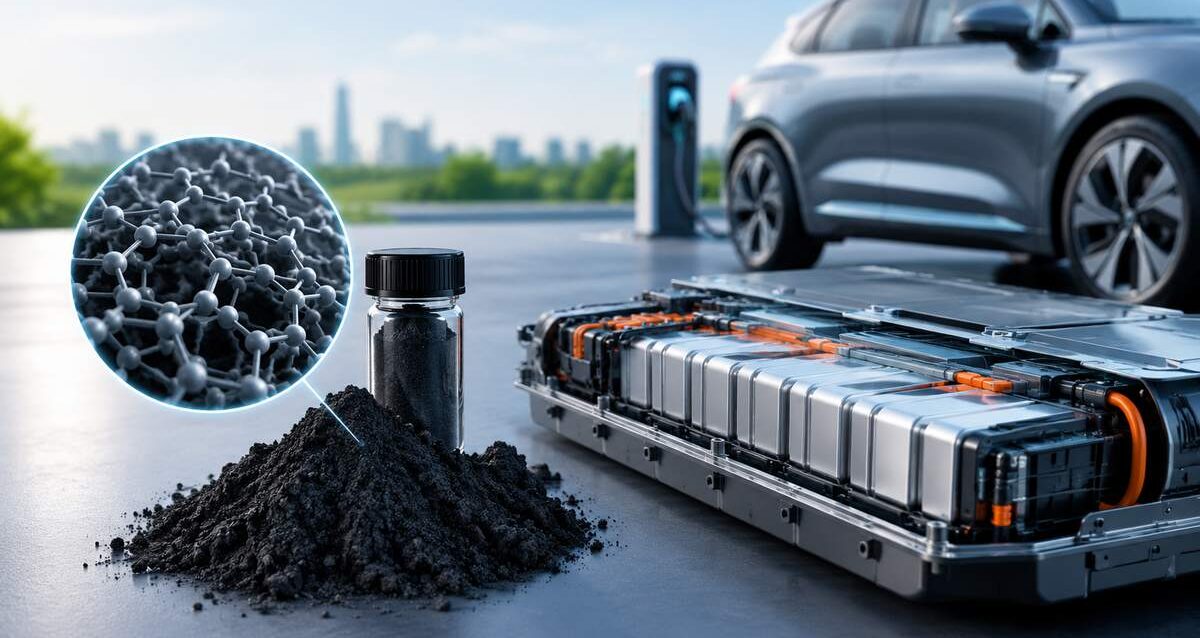
Electric vehicles are everywhere now, and honestly, the real story behind their progress isn’t just about sleek designs or fancy dashboards. It’s about what’s happening inside the battery pack. And that’s where nanocarbon for EV batteries comes into the picture. If you’ve been following battery tech news lately, you’ve probably seen this term popping up more and more, and there’s a good reason for that.
Nanocarbon materials are quietly becoming one of the most talked-about innovations in the EV world. They’re helping engineers solve problems that traditional battery materials just couldn’t crack on their own. So let’s break down what nanocarbon for EV batteries actually means, why it matters, and where things might be headed.
What Exactly is Nanocarbon?
Before diving deep, let’s keep this simple. Nanocarbon refers to carbon-based materials engineered at the nanoscale — think graphene, carbon nanotubes, and fullerenes. These materials are incredibly small, but don’t let their size fool you. They pack serious performance benefits when used in battery components.
When we talk about nanocarbon for electric vehicle batteries, we’re mainly referring to how these materials are used in electrodes, conductive additives, and even in battery casings to improve overall efficiency and durability.
Why Nanocarbon Matters for EV Batteries?
EV batteries face a tough job. They need to store more energy, charge faster, last longer, and stay safe under different conditions. Traditional lithium-ion batteries have come a long way, but they’re hitting certain limits. This is exactly where nanocarbon battery technology steps in to bridge the gap.
Here’s why nanocarbon is such a big deal in this space:
- It improves electrical conductivity within the battery, which means faster charging and better energy transfer.
- It increases the surface area of electrodes, allowing more lithium ions to move in and out efficiently.
- It adds mechanical strength, helping batteries handle stress without breaking down quickly.
- It supports better heat dissipation, reducing the risk of overheating.
Basically, nanocarbon for EV batteries isn’t just a nice-to-have. It’s becoming a necessity for automakers who want to stay competitive.
Key Benefits of Nanocarbon in EV Batteries
Let’s talk about the real-world benefits, because that’s what actually matters to manufacturers and consumers alike.
- Faster Charging: One of the biggest complaints EV owners have is charging time. Nanocarbon materials, especially graphene, help ions move faster within the battery. This means shorter charging sessions without compromising battery health.
- Improved Energy Density: With nanocarbon materials for EVs, batteries can store more energy in a smaller space. This directly translates to longer driving ranges, which is a major selling point for any EV buyer.
- Longer Battery Life: This is probably the most exciting part. Nanocarbon for longer EV battery life is a phrase you’ll hear a lot in research papers and industry discussions. Since nanocarbon reduces degradation at the electrode level, batteries retain their capacity for a longer time, meaning fewer replacements and lower long-term costs.
- Better Safety: Battery fires and thermal runaway are real concerns in the EV industry. Nanocarbon materials help manage heat better, reducing the chances of such incidents.
- Lightweight Structure: Since nanocarbon materials are incredibly light yet strong, they help reduce the overall weight of the battery pack. Lighter batteries mean better vehicle efficiency overall.
Applications of Nanocarbon in EV Batteries
Now let’s look at where nanocarbon is actually being used in today’s battery systems.
- Anodes and Cathodes: Nanocarbon materials, particularly graphene and carbon nanotubes, are used to enhance electrode performance, improving both conductivity and stability.
- Conductive Additives: Even in small quantities, nanocarbon can significantly boost the conductivity of battery components without adding much weight.
- Battery Coatings: Some manufacturers use nanocarbon coatings to protect internal components from corrosion and degradation.
- Thermal Management Systems: Nanocarbon’s excellent heat conductivity makes it useful in managing battery temperature, which is critical for both performance and safety.
This wide range of applications is exactly why nanocarbon battery performance is being studied so heavily by researchers and EV companies worldwide.
Must Read : How Carbon Nanotubes Properties Enhance Composite Materials?
Challenges That Still Need to Be Solved
Of course, no technology is perfect, and nanocarbon for EV batteries still faces a few hurdles before it becomes mainstream at scale.
- High Production Costs: Manufacturing high-quality nanocarbon materials like graphene isn’t cheap. Scaling up production while keeping costs low remains a major challenge for the industry.
- Consistency in Quality: Producing nanocarbon materials with uniform quality across large batches is still tricky. Any inconsistency can affect battery performance and reliability.
- Integration with Existing Battery Systems: Automakers can’t just swap in nanocarbon materials overnight. It requires redesigning certain battery components, which takes time, testing, and investment.
- Limited Large-Scale Data: While lab results are promising, there’s still a need for more real-world, long-term data to fully understand how nanocarbon materials perform in EVs over years of usage.
- Environmental Concerns: The production process for some nanocarbon materials can be energy-intensive, raising questions about their overall environmental footprint.
Despite these challenges, the momentum behind nanocarbon materials for EVs isn’t slowing down. Researchers and manufacturers are actively working on making production more cost-effective and scalable.
The Road Ahead
As EV demand grows, battery technology needs to grow with it. Nanocarbon battery technology is shaping up to be one of the strongest contenders for the next generation of EV batteries. Companies investing early in this space are likely to gain a competitive edge, especially as consumers demand faster charging, longer range, and safer batteries.
We’re also seeing increased collaboration between material scientists, battery manufacturers, and automakers to bring nanocarbon innovations from the lab to the road faster. This kind of collaborative push is exactly what’s needed to overcome the current production and cost challenges.
Final Thoughts
Nanocarbon for EV batteries is more than just a buzzword in the EV industry. It represents a genuine shift in how batteries are designed and built. From faster charging to improved safety and longer lifespan, the benefits are hard to ignore. Sure, there are challenges around cost and scalability, but the pace of research suggests these hurdles won’t stick around forever.
If you’re keeping an eye on the future of electric vehicles, nanocarbon materials are definitely something worth watching. As production techniques improve and costs come down, we can expect to see nanocarbon battery performance become a standard feature in EVs rather than a niche innovation.
FAQs
- What is nanocarbon used for in EV batteries?
Nanocarbon improves conductivity, energy storage, and heat management in EV batteries, leading to faster charging and longer battery life.
- Does nanocarbon make EV batteries safer?
Yes, nanocarbon helps with better heat dissipation, reducing the risk of overheating and thermal runaway in EV batteries.
- Why is nanocarbon better than traditional battery materials?
Nanocarbon offers higher conductivity, more surface area, and better durability compared to traditional materials, improving overall battery performance.
- Is nanocarbon battery technology expensive?
Yes, currently production costs are high, but ongoing research aims to make nanocarbon materials more affordable for mass production.
- Will nanocarbon increase EV driving range?
Yes, nanocarbon improves energy density, allowing batteries to store more power, which can directly increase an EV’s driving range.