


If you’ve ever wondered why some of the strongest, lightest materials on earth are made using something almost invisible to the naked eye, you’re about to find out. Carbon nanotubes properties are quietly revolutionizing the world of composite materials, and once you understand why, you’ll see them everywhere—from sports equipment to spacecraft.
Let’s break this down in plain, simple language and explore why scientists and engineers are so obsessed with these tiny tubes.
What Exactly Are Carbon Nanotubes?
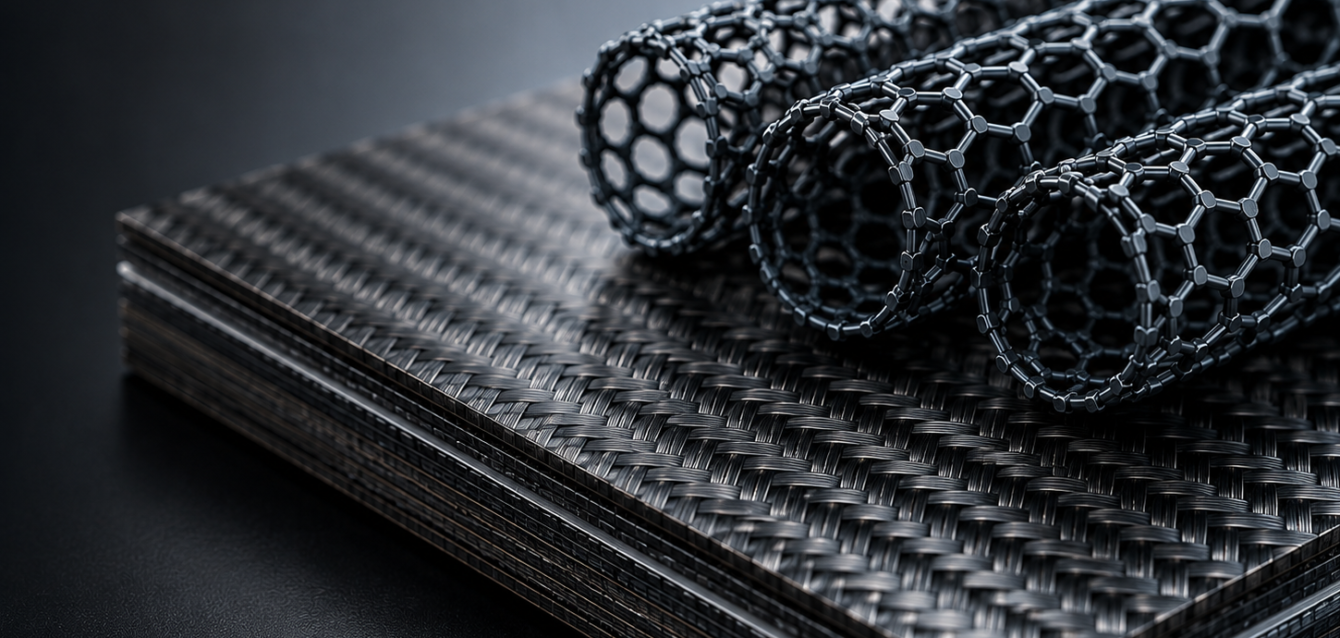
Before we dive into the good stuff, let’s get the basics right. Carbon nanotubes are cylindrical structures made entirely of carbon atoms, arranged in a hexagonal pattern. Think of them as rolled-up sheets of graphene, so thin that thousands of them could fit across the width of a single human hair.
Understanding the carbon nanotube structure is key to understanding why these materials behave the way they do. The atoms are bonded so tightly and efficiently that the resulting structure becomes incredibly strong, yet remains lightweight. This unique carbon nanotube structure is the foundation for everything else we’re about to discuss.
Why Carbon Nanotubes Properties Matter So Much
When people talk about carbon nanotubes properties, they’re usually referring to a combination of mechanical, thermal, and electrical characteristics that are rare to find in a single material. This is what makes them so valuable for composite materials.
Here are the standout properties of carbon nanotubes that make them a game-changer:
- Exceptional strength-to-weight ratio – They’re stronger than steel but many times lighter.
- High electrical conductivity – Great for creating conductive composites without adding heavy metal fillers.
- Excellent thermal conductivity – Helps dissipate heat efficiently in various applications.
- Flexibility – Despite their strength, they can bend without breaking easily.
- Chemical stability – They resist degradation from most chemicals and environmental factors.
These carbon nanotube characteristics work together, which is exactly why they’re used to reinforce and enhance so many different types of materials.
The Tensile Strength Factor
Let’s now talk about carbon nanotubes tensile strength. This is probably the single most talked-about property in the nanotechnology world, and for good reason.
Carbon nanotubes have a tensile strength that can be up to 100 times greater than steel, while weighing about one-sixth as much. That’s not a small claim. It means when you add even a tiny amount of carbon nanotubes into a composite material, you can drastically improve its strength without making it heavier.
This is precisely why industries dealing with aerospace, automotive, and even sports equipment are so interested in carbon nanotubes tensile strength. Imagine a tennis racket, a car panel, or an aircraft wing that’s significantly stronger but doesn’t add extra weight. That’s the kind of transformation we’re talking about.
Must Read: Green Hydrogen vs Turquoise Hydrogen Technology
How Carbon Nanotubes Enhance Composite Materials?
Now let’s get to the heart of the matter—how do carbon nanotubes properties actually improve composite materials in real-world applications?
1. Boosting Mechanical Strength
When carbon nanotubes are mixed into polymers, metals, or ceramics, they act as reinforcing agents. The composite material inherits some of the incredible strength and durability of the nanotubes. This means products can be built thinner and lighter, yet perform better under stress.
2. Improving Electrical Conductivity
Many composite materials, especially plastics, are naturally poor conductors of electricity. Adding carbon nanotubes changes that completely. Because of their high electrical conductivity, they help create composites that can be used in electronics, sensors, and even anti-static coatings.
3. Enhancing Thermal Management
Heat resistance and dissipation are crucial in many industries, especially electronics and aerospace. Carbon nanotubes properties help composites manage heat more efficiently, reducing the risk of overheating or material degradation over time.
4. Increasing Durability and Lifespan
Because of their chemical stability, carbon nanotubes help composite materials resist wear, corrosion, and environmental damage. This means longer-lasting products with reduced maintenance needs.
5. Reducing Overall Weight
This is a big one. Since carbon nanotubes are incredibly light yet strong, they allow manufacturers to reduce the amount of material needed while still achieving—or even improving—the required strength standards. This is especially valuable in industries like aviation, where every gram counts.
Real-World Applications Using Carbon Nanostructures
Carbon nanostructures, including nanotubes, are already being used in some fascinating ways:
- Aerospace components that need to be lightweight yet incredibly strong
- Automotive parts designed to reduce vehicle weight and improve fuel efficiency
- Sports equipment like bicycles, tennis rackets, and golf clubs
- Electronics, including flexible displays and conductive films
- Medical devices that require biocompatibility along with strength
This wide range of applications shows just how versatile carbon nanotubes in nanotechnology have become. It’s not just a lab experiment anymore—it’s an everyday material shaping the products we use.
Challenges Worth Mentioning
Of course, no technology is without its challenges. Manufacturing carbon nanotubes at scale while maintaining consistent quality is still a work in progress. Cost is another factor, as producing high-quality nanotubes can be expensive compared to traditional materials.
There are also ongoing studies about the environmental and health impacts of nanomaterials, which researchers are actively working to understand better. However, despite these hurdles, the potential benefits continue to outweigh the current limitations, which is why research and investment in this field keep growing.
The Future of Carbon Nanotubes in Composite Materials
As research continues to evolve, we’re likely to see even more advanced applications of carbon nanotubes properties in composite materials. Scientists are working on improving manufacturing techniques to make nanotube-based composites more affordable and accessible for mass production.
The demand for lighter, stronger, and more efficient materials isn’t slowing down anytime soon. Whether it’s for building safer vehicles, more efficient energy storage systems, or next-generation electronics, carbon nanotubes in nanotechnology will likely play a central role in shaping these innovations.
Final Thoughts
Carbon nanotubes properties have opened up a whole new world of possibilities for composite materials. From their outstanding tensile strength to their impressive thermal and electrical conductivity, these tiny structures are proving that big improvements often come in small packages.
As industries continue exploring the full potential of carbon nanostructures, we can expect to see even more innovative products that are lighter, stronger, and more efficient than ever before. If you’re someone keeping an eye on advancements in nanotechnology, this is definitely a space worth watching closely.
FAQs
Q1. What makes carbon nanotubes properties so unique?
Their combination of high strength, light weight, and excellent conductivity makes carbon nanotubes properties rare and valuable for advanced composite materials across multiple industries.
Q2. How strong are carbon nanotubes compared to steel?
Carbon nanotubes tensile strength can be up to 100 times greater than steel, while remaining significantly lighter, making them ideal for high-performance composite applications.
Q3. What is the basic carbon nanotube structure?
The carbon nanotube structure consists of rolled graphene sheets forming hollow cylinders, with carbon atoms arranged in a strong hexagonal lattice pattern.
Q4. Where are carbon nanotubes commonly used?
Carbon nanotubes are used in aerospace, automotive, electronics, sports equipment, and medical devices due to their strength, conductivity, and lightweight nature.
Q5. Are carbon nanotubes expensive to produce?
Yes, currently carbon nanotubes can be costly to manufacture at scale, though ongoing research aims to make production more affordable and efficient.