


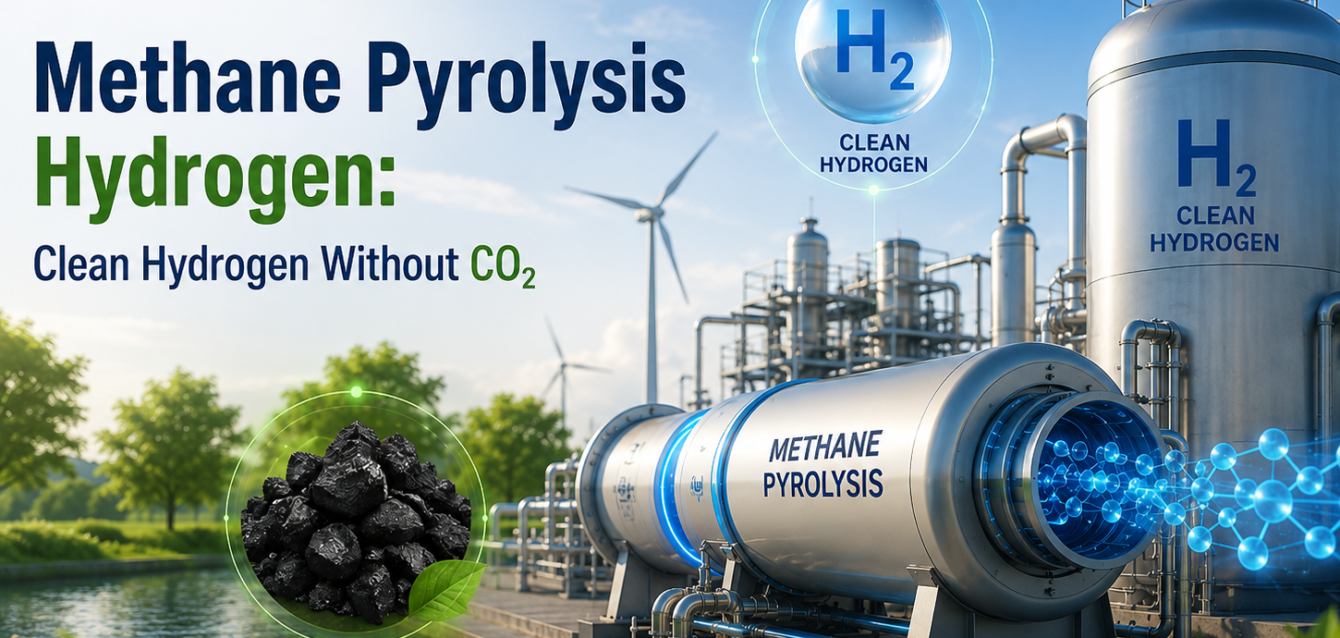
Discover methane pyrolysis hydrogen, a clean method for hydrogen production without CO2, producing solid carbon and sustainable carbon materials.
Introduction
Global demand for clean hydrogen is growing rapidly as industries seek low-carbon energy solutions. Traditional hydrogen production methods often release significant amounts of CO₂, creating environmental challenges. Methane pyrolysis hydrogen is emerging as a promising alternative because it produces hydrogen without CO₂ emissions at the point of production. Instead of generating carbon dioxide, the process creates valuable solid carbon materials that can be used in advanced industrial applications. This makes methane pyrolysis hydrogen an attractive pathway for sustainable energy and advanced carbon manufacturing.
What is Methane Pyrolysis Hydrogen?
Methane pyrolysis hydrogen is produced by splitting methane (CH₄) into hydrogen gas and solid carbon using high temperatures or plasma-based technologies. Unlike steam methane reforming, this process avoids direct CO₂ generation, making it a cleaner option for hydrogen production.
How Turquoise Hydrogen Works
Turquoise hydrogen is the hydrogen generated through methane pyrolysis. The process breaks methane into hydrogen and carbon. Since carbon remains in a solid form, carbon dioxide emissions are significantly reduced. This approach bridges the gap between conventional and renewable hydrogen technologies.
Hydrogen Production Without CO2 Explained
Hydrogen production without CO₂ is one of the key advantages of methane pyrolysis. The technology eliminates the need for carbon capture systems because carbon is captured naturally as a solid byproduct. This can improve process efficiency while supporting sustainability goals.
Solid Carbon from Methane: A Valuable Byproduct
Solid carbon from methane is not waste. It can be used in batteries, rubber products, electronics, composites, pigments, and construction materials. The ability to monetize solid carbon improves the overall economics of methane pyrolysis projects.
Sustainable Carbon Black Production
Methane pyrolysis can support sustainable carbon black production by creating high-quality carbon materials with a lower environmental footprint. Industries seeking greener alternatives to conventional carbon black are increasingly exploring this opportunity.
Plasma Hydrogen Production Integration
Plasma hydrogen production uses ionized gases to efficiently split methane molecules. Plasma systems can offer rapid reaction rates, high conversion efficiency, and flexible operation, making them suitable for next-generation hydrogen facilities.
Microwave Plasma Methane Cracking Technology
Microwave plasma methane cracking uses microwave energy to generate plasma and break methane into hydrogen and carbon. This advanced technology can provide precise process control, lower emissions, and high-quality carbon products.
Nanocarbon Material Applications
The carbon produced through methane pyrolysis can be engineered into valuable nanocarbon materials. Applications include energy storage, conductive materials, coatings, advanced composites, sensors, and electronics manufacturing.
Advanced Carbon Materials in India Market
India’s growing focus on clean energy, manufacturing, and advanced materials is creating opportunities for methane pyrolysis technologies. Demand for advanced carbon materials in batteries, electric vehicles, electronics, and industrial applications is expected to increase, supporting market growth.
| Benefit | Impact |
| Hydrogen production without CO₂ | Reduces greenhouse gas emissions |
| Solid carbon byproduct | Creates additional revenue opportunities |
| Plasma technologies | Improves efficiency and scalability |
| Advanced carbon materials | Supports high-value industrial applications |
Conclusion
Methane pyrolysis hydrogen represents a powerful pathway toward cleaner energy production. By enabling hydrogen production without CO₂ while generating valuable solid carbon materials, the technology supports both sustainability and industrial innovation. With advances in plasma hydrogen production, microwave plasma methane cracking, and nanocarbon applications, methane pyrolysis hydrogen is positioned to play an important role in the future hydrogen economy.
FAQs
Q1. Why is methane pyrolysis considered different from carbon capture technologies?
Methane pyrolysis prevents CO₂ formation during hydrogen production by converting methane into hydrogen and solid carbon. Carbon capture systems remove CO₂ after it is produced, while pyrolysis avoids creating it in the first place, reducing process complexity.
Q2. What determines the quality of solid carbon produced during methane pyrolysis?
The quality of solid carbon depends on reactor design, operating temperature, methane purity, and the cracking technology used. Advanced systems can produce high-value carbon suitable for batteries, composites, electronics, and specialty industrial products.
Q3. Can methane pyrolysis support large-scale industrial hydrogen demand?
Yes. Modern methane pyrolysis systems are being developed for industrial-scale deployment. Plasma and microwave-based technologies offer higher conversion efficiency and scalability, making them suitable for growing hydrogen requirements across multiple sectors.
Q4. How does microwave plasma methane cracking improve process performance?
Microwave plasma methane cracking provides precise temperature control and rapid methane conversion. This can improve hydrogen yield, reduce unwanted byproducts, and produce more consistent carbon materials for advanced manufacturing applications.
Q5. Which industries benefit most from methane pyrolysis beyond hydrogen production?
Industries such as battery manufacturing, electric vehicles, electronics, construction materials, coatings, and advanced composites benefit from the solid carbon byproducts. These materials create additional commercial value alongside clean hydrogen generation.